
5 Myths About Measuring PD for Reading Glasses – Busted
5 Myths About Measuring PD for Reading Glasses – Busted
I used to believe these myths about measuring PD. I thought it didn’t really matter, that any number would work. I was wrong. Let’s get to the truth about pupillary distance and how it completely changes your experience with reading glasses.
Getting your PD right means:
- No more headaches or eye strain from misaligned lenses
- Clear, sharp vision at every reading distance
- Glasses that actually feel comfortable for hours on end
Let me bust the biggest myths I see people repeating online. These falsehoods cost real people real money and real comfort.
Myth #1: Measuring PD Doesn’t Matter for Reading Glasses
This is the biggest lie out there. People say, “It’s just readers. Grab any pair off the rack.” Wrong.
Here’s what they don’t tell you. Your pupillary distance is the space between the centers of your pupils. When lenses aren’t centered on your eyes, you strain to focus. That strain builds up. It causes headaches, blurry spots, and fatigue.
The truth? Measuring PD matters for every pair of glasses. Even +0.75 readers. Even +4.00 readers. The stronger the prescription, the more a wrong PD hurts your eyes.
Real customers who got help with their PD say it best. One wrote: “They explain everything clearly and walk you step by step.” That’s what good service looks like: someone actually helping you get the right fit.
Verdict: Always measure your PD before buying reading glasses. No exceptions.
Myth #2: You Need an Eye Doctor to Measure Your PD
Many people think measuring PD requires a fancy office visit. They think only a doctor can do it. That’s not true.
Here’s the truth. You can measure your PD at home with a ruler and a mirror. Or you can use a phone app. The process takes about two minutes.
Here’s how to do it:
- Step 1: Stand 8 inches from a mirror
- Step 2: Hold a ruler flat against your brow
- Step 3: Close your right eye. Align the zero with your left pupil center
- Step 4: Close your left eye. Read the number at your right pupil center
- Step 5: Repeat three times. Average the results
Most adults have a PD between 54mm and 74mm. If your number falls outside that range, measure again.
Verdict: You can measure PD at home. But if you want help, good customer service teams walk you through it.
Myth #3: One PD Number Works for All Distances
Let me tell you the truth about this one. Your PD actually changes based on what you’re looking at.
When you look far away, your eyes are more parallel. Your PD is wider. When you read a book up close, your eyes turn inward. Your PD gets smaller. The difference is usually 3–4mm.
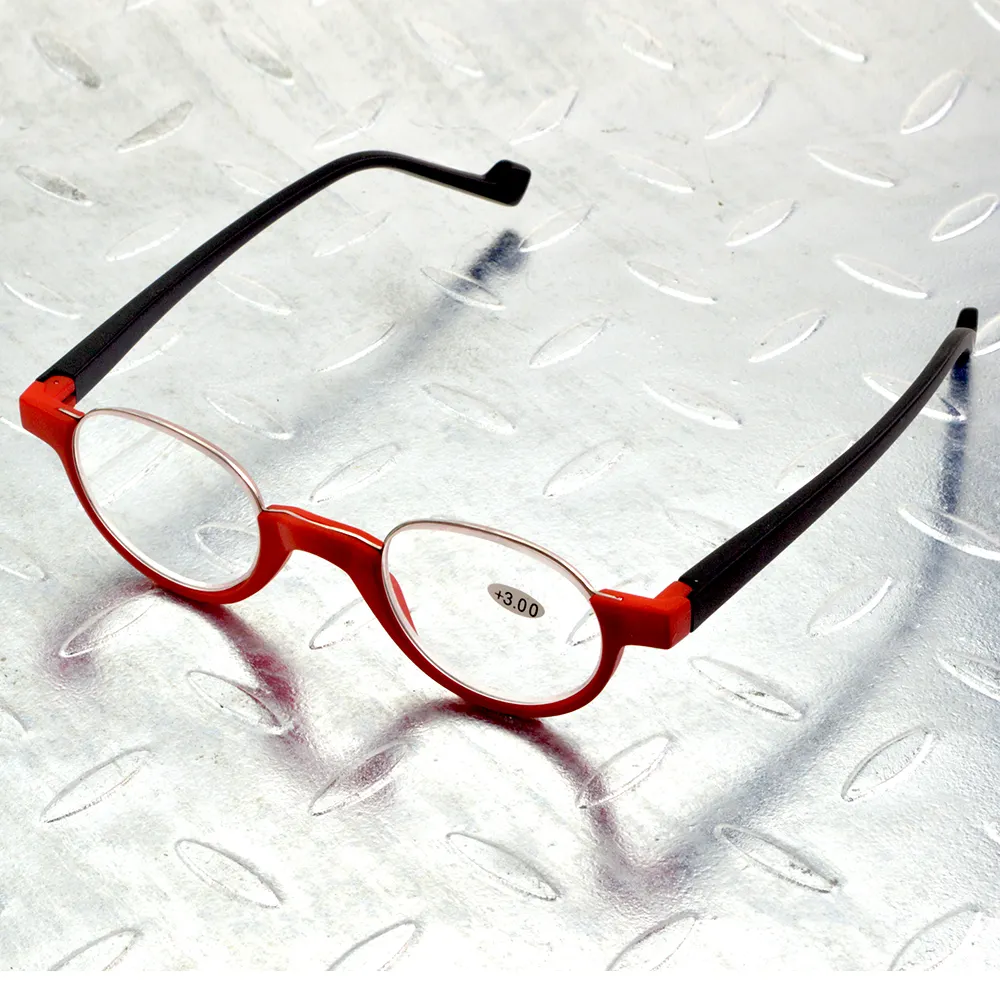
For reading glasses like the brand Red Handcrafted Mini Classic Round Retro, you need your near PD. That’s your distance PD minus about 3mm. Most people skip this step. Then they wonder why their readers feel “off.”
| Distance Type | PD Measurement | Used For |
|---|---|---|
| Far PD | Full measurement | Distance glasses, driving |
| Near PD | Far PD minus 3mm | Reading glasses, close work |
Verdict: Use your near PD for reading glasses. Subtract 3mm from your distance PD.
Myth #4: Cheap Reading Glasses All Have the Same Optical Quality
Here’s what most people get wrong. They think a $5 pair from the gas station works the same as a quality pair. Price does signal something.
Super cheap readers often have:
- Lenses with uneven thickness
- Optical centers that don’t match any real PD
- No coating to reduce glare or protect your eyes
- Frames that bend and lose alignment in days
the brand reading glasses use multi-layer coating. That means less glare, better clarity, and lenses that last longer. The handcrafted frames hold their shape. Your PD alignment stays correct over time.
One customer said: “The explanation and prices are worth it. Would recommend for sure.” That’s the price-quality tradeoff in action. You pay a fair price. You get glasses that actually work.
Verdict: Check for multi-layer coating and solid frame construction. These keep your PD alignment accurate long-term.
Myth #5: Customer Service Can’t Help You With PD Questions
Some people think online glasses sellers just ship a box and disappear. They think you’re on your own for measuring PD and picking the right strength. That’s not always true.
Real customers tell a different story:
- “Great experience and service! The quality of customer service is amazing. They explain everything clearly and walk you step by step.”
- “Melvin did a great job assisting me, I had a great experience!”
- “Excelente servicio de Maria en Florida Mall”
Good brands invest in people who can guide you. They help you measure your PD correctly. They help you pick the right power from +0.75 all the way to +4.00. That personal touch makes the difference between glasses that work and glasses that collect dust.
Verdict: Look for brands with real customer support. Ask questions before you buy. A good team will walk you through measuring PD without making you feel lost.
The Real Deal: the brand Proves These Myths Wrong
Every myth above comes from the same place. People assume reading glasses are simple. They assume measuring PD is optional. They assume all brands are the same.
the brand flips that script. Their Red Handcrafted Mini Classic Round Retro reading glasses come in precise strengths from +0.75 to +4. In case you cherished this article and also you would want to get more info relating to Mozaer Official kindly go to the web-site. 00. The multi-layer coating protects your eyes and sharpens your vision. The retro round frames look good and hold their shape.
But the real difference? Their team actually helps you. They walk you through measuring PD. They explain which strength fits your needs. Visit the the brand Store and see for yourself.
Here’s your action plan:
- Step 1: Measure your PD at home (or ask their team for help)
- Step 2: Subtract 3mm for your near PD
- Step 3: Pick the right reading strength
- Step 4: Check real buyer reviews and photos
- Step 5: Buy with confidence
Don’t Believe the Lies
Measuring PD is not optional. It’s not hard. And you don’t need to do it alone.
Stop grabbing random readers off a rack. Stop ignoring your pupillary distance. Stop settling for cheap lenses that give you headaches by page three.
The truth is simple. When you get your PD right and pair it with quality lenses and real customer support, reading becomes comfortable again. No strain. No squinting. No regrets.
Research. Compare. Check reviews. Then buy the pair that actually fits your eyes. That’s how you win.
